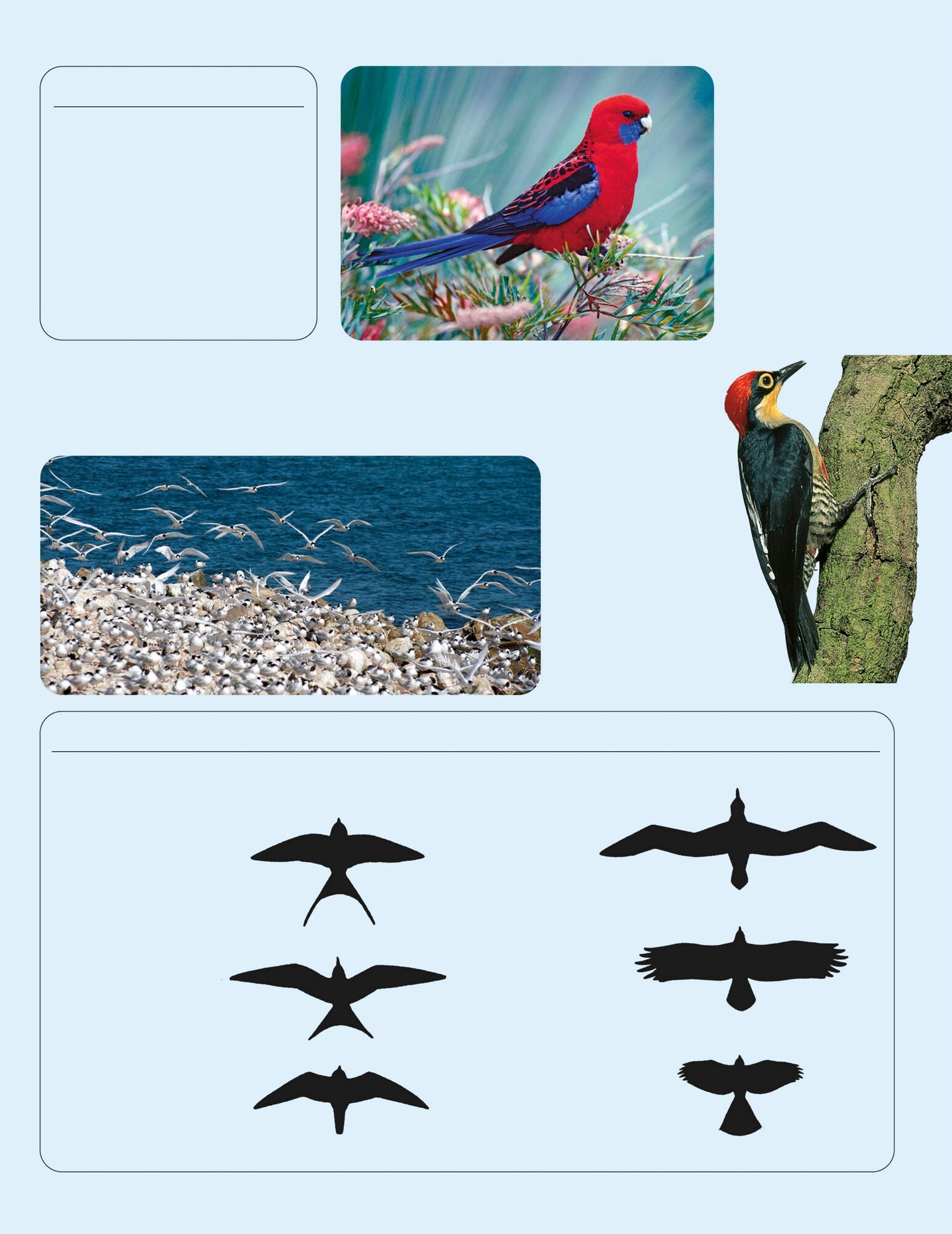
69Coastlines The coast is a good place to see gulls and other seabirds. Look out for waders feeding on worms and shellfish in the shallow waters of estuaries.Golden-fronted woodpeckerForest and woodlandWith plenty of nuts, seeds, and insects to eat, and safe places to nest, forests and woodlands provide a rich habitat for birds. Gannet colonyTropical forestsWhen on holiday, it is well worth visiting local national parks to see native species of birds. The Lamington National Park in Queensland, Australia, is home to many tropical birds.Crimson rosellaUSEFUL WEBSITES• The British Trust for Ornithology studies the populations of birds in the UK over time. It has a youth advisory group to represent young people. www.bto.org• The Wildfowl and Wetlands Trust has visitor centres all around the country: www.wwt.org.uk• The RSPB has a junior section called RSPB Wildlife Explorers: www.rspb.org.ukIDENTIFYING BIRDS BY THEIR FLIGHT SILHOUETTESwallowTernFalconAlbatrossEagleSparrowhawkNarrow, tapering wingsFast-fliers, such as swallows and swifts, have slender wings and forked tails.Long, elegant wingsSeabirds that spend a lot of time in the air have long, narrow wings. Broad, pointed wingsFalcons have narrow tails and broad, pointed wings for high-speed flying.Massive wingspanLong-distance gliders have long, pointed wings to glide on warm currents of air. It is quite rare to spot an albatross.Feathered fingersEagles and vultures have large, wide wings with splayed “fingers”.Short, round wingsMany woodland birds have short, wide, rounded wings to fly among trees.Look out for these flight silhouettes to help you identify the birds you see.